How to Choose (Feng Shui)
Choosing an auspicious moving day is usually a two-layer decision:
- General auspiciousness (Yi/Ji): use traditional almanac “Yi (suitable) / Ji (avoid)” keywords like move-in / relocation (e.g., 入宅 / 移徙).
- Personal fit (household + home): make sure the date works for your household’s timing, the new home’s condition, and practical constraints (work, movers, weather, etc.).
Below is a Feng Shui–friendly way to pick a date without overcomplicating it:
Step 1: Start from “Good Days” for moving-in keywords
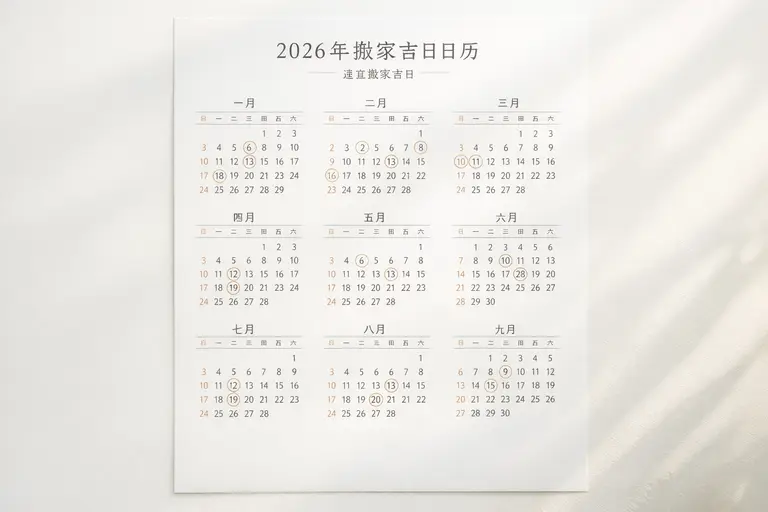
If you’re using an almanac-style dataset, begin with dates marked good for moving based on “Yi/Ji” keywords (宜忌). This is the fastest way to narrow down from 365 days to a manageable shortlist.
You can see all 2026 auspicious moving dates organized by month in the date table here.
Step 2: Avoid obvious “bad fit” days
Even if a day is generally good, many people still avoid:
- Days that are clearly labeled “avoid moving / move-in” in Ji keywords
- Days that conflict with your logistics (late-night elevator restrictions, no parking for trucks, etc.)
- Days with rushed timing (no buffer for cleaning, repairs, or utilities)
Practical Feng Shui is about reducing chaos. A “perfect” day with a stressful move can backfire psychologically.
Step 3: Choose a good time window (not just a date)
Feng Shui and traditional date selection often emphasizes time as much as day. In practical terms:
- Prefer a time when you can enter calmly, do a quick walkthrough, and place key items
- Avoid moving in during a time you’ll be exhausted or rushing
- If possible, arrive when the home has good light and airflow (open windows briefly, check ventilation)
Step 4: Do a “clean + activate” sequence
A simple, widely used approach:
- Clean first (dust, floors, bathrooms)
- Activate the home with light and gentle movement: turn on lights, open curtains, let fresh air circulate
- Bring a few “stability” items first (see checklist below)
This aligns with the Feng Shui idea of setting the home’s first impression and flow.
Step 5: Keep your first day simple
On the first day, prioritize:
- Safety + essentials
- Sleeping setup
- A calm first meal
Many Feng Shui traditions treat the first night as “setting the tone,” so avoid conflict, clutter explosions, or major renovations on the same day if you can.
Step 6: If you want it truly personalized, add birth details
A general “lucky date list” is great for planning, but people who want stronger confidence often match the move-in date with personal birth details (BaZi).
If you’d like a more personalized answer, tools like Shenshu AI use AI to analyze your BaZi chart and simulate consultations with an AI fortune-telling master, helping you identify move-in dates that best align with your personal destiny and current luck cycle.

Moving Day Checklist
This checklist is designed for a smooth move and a Feng Shui-friendly “first entry” flow.
1–2 Weeks Before Moving
- Book movers / confirm schedule (time window, parking rules, elevator reservation)
- Measure doorways + large items (so nothing gets stuck at the entrance)
- Sort + donate (less clutter = better flow)
- Prepare essentials boxes (first-night kit, cleaning kit, tools)
- Set up mail forwarding / change of address (avoid missing important documents)
- Transfer utilities / internet (electricity, water, gas, Wi-Fi—ideally active before arrival)
3–5 Days Before Moving
- Deep clean the new home (especially kitchen + bathrooms)
- Check safety: locks, smoke/CO detectors, basic repairs
- Pack a “first entry” bag/box (carry yourself, not in the truck):
- documents, chargers, meds
- water + snacks
- paper towels, trash bags, wipes
- small toolkit (box cutter, tape, screwdriver)
- Label boxes by room + priority (“open first / open later”)
Moving Day — Before You Leave
- Take photos of old home condition (especially if renting)
- Keep valuables with you (passport, jewelry, devices)
- Confirm mover inventory list / contact numbers
- Do one last sweep: closets, drawers, bathroom cabinets
Moving Day — Arrival Flow (Feng Shui–friendly)
- Enter calmly with your essentials first-entry box
- Open curtains / turn on lights (activate brightness and clarity)
- Quick ventilation if weather allows
- Place basics first:
- bed setup priority (rest = stability)
- bathroom essentials
- kitchen basics (kettle, cups, simple meal)
First Night / First Week
- Unpack sleeping area fully
- Keep walkways clear (reduce clutter “blockages”)
- Confirm mail forwarding is active and update key accounts (bank, subscriptions, etc.)
- Store important documents in one dedicated spot
Avoid These Common Mistakes
- Arriving with no cleaning supplies
- Unpacking everything randomly (creates weeks of chaos)
- Forgetting parking/elevator rules (massive stress)
- Leaving utilities activation to moving day

FAQ
Q1: What is an “auspicious moving date”?
An auspicious moving date is a day traditionally considered favorable for moving or move-in activities. Many lists are based on almanac-style “Yi/Ji” (suitable/avoid) keywords—meaning the day is marked as suitable for actions like “move-in” or “relocation.”
Q2: Are “good days” always good for everyone?
Not necessarily. A general list is best for planning, but people who want higher confidence often match the day with personal birth details (BaZi) and practical constraints (work schedule, movers, home readiness).
Q3: Should I avoid moving on weekends?
Weekends are convenient, but availability is tighter and movers may cost more. If your list supports it, filter for “weekend only” and choose a day that also fits your timing and preparation level.
Q4: What if my only available day is marked “avoid”?
If you must move, reduce risk by improving controllables: arrive earlier, keep the first entry calm, clean before unpacking, and avoid major renovations or stressful conflicts that day. Many people treat the date as a “signal,” but execution matters.
Q5: What does Yi (suitable) and Ji (avoid) mean in practice?
Yi indicates activities traditionally considered suitable on that day; Ji indicates activities traditionally discouraged. If move-in keywords appear in Yi, it’s generally treated as favorable; if they appear in Ji, it’s commonly treated as a day to avoid.
Q6: What’s the difference between “moving” and “move-in”?
“Moving” can mean transporting items; “move-in” is the first formal entry and settling. Some people transport boxes earlier but choose an auspicious day/time for the first entry and first night.
Q7: What should I do first when entering a new home (Feng Shui)?
Keep it simple: enter calmly with essentials, turn on lights, open curtains, ventilate briefly, and set up the bedroom first. A stable first night often matters more than complex rituals.
Q8: Can I use this list for any country/timezone?
The calendar date is universal, but the move-in time window depends on your local timezone and schedule. For best results, use local time and confirm the home is ready (utilities, access rules, etc.).